
Share
Air ambulance charter services play a vital role in emergency and crisis response. This is particularly the case when distance or terrain makes conventional medical support impractical. Air ambulances are specialised aircraft, configured to function as airborne intensive care units. They transport critically ill or injured patients on priority, while continuous medical care is administered during transit.
As part of its wider portfolio of air charter service offerings, Air Charter International supports medically configured private aviation solutions through an accredited global network. With over thirty years of experience in complex aviation coordination, ACI’s air ambulance missions prioritise time and clinical readiness.
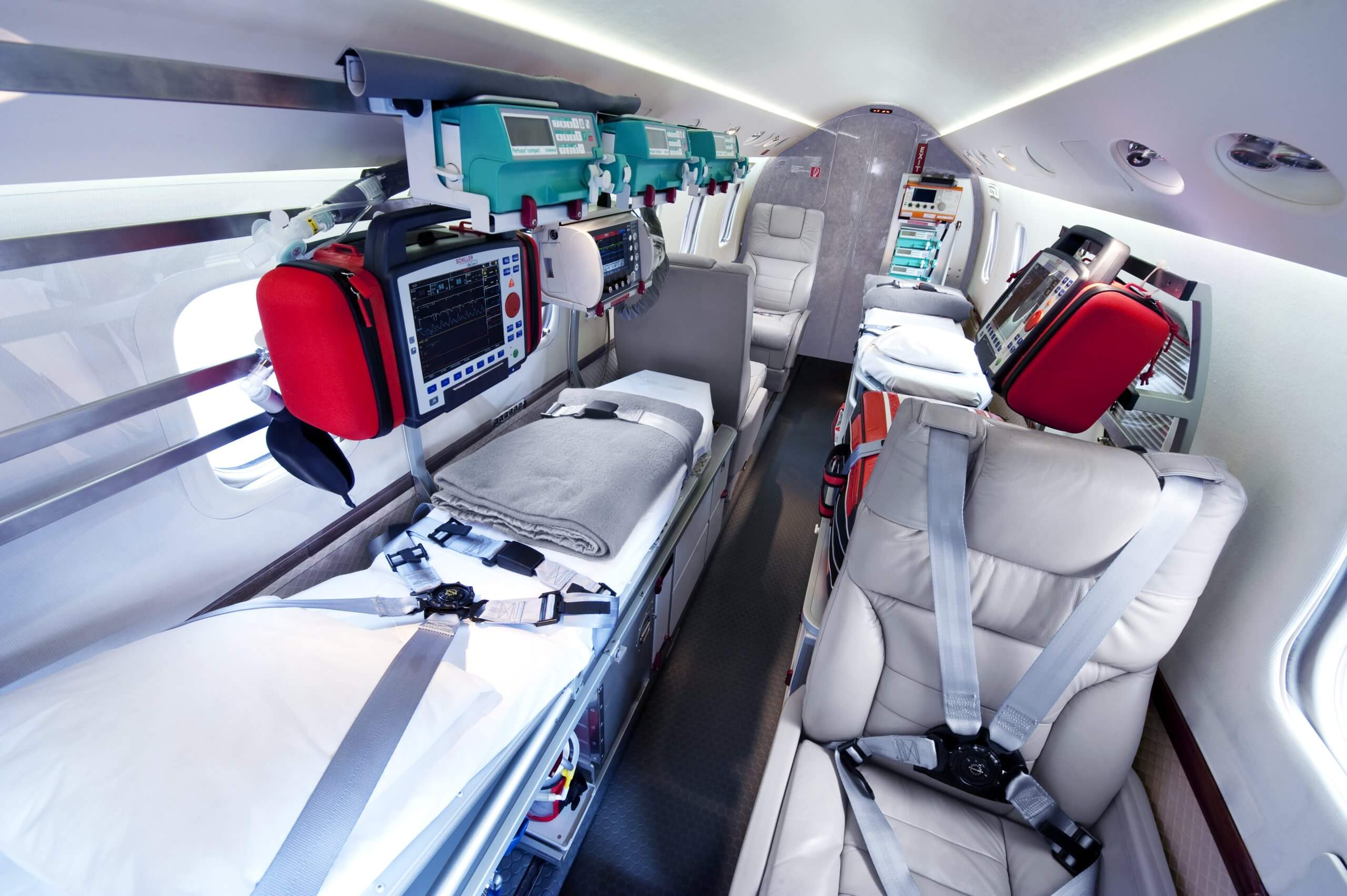
What are Air Ambulances
For those seeking to understand what is an air ambulance, it is best understood as a flying medical facility. Staffed by trained medical professionals, they are aircraft outfitted.
Air Ambulance vs Ground Ambulance
| Criteria | Air Ambulance | Ground Ambulance |
|---|---|---|
| Speed & Range | Covers long distances rapidly, including international routes | Best suited for short to medium distances |
| Medical Capacity | Equipped to administer critical care within a pressurised, compact cabin | Can provide critical support, often with larger working volume than jets |
| Terrain Access | Often chosen to bypass remote or inaccessible locations | Dependent on road infrastructure |
| Use Case | Time-sensitive, complex, or cross-border transfers | Local emergencies and hospital transfers |
Key Components of Air Ambulance Equipment
Air ambulance medical gear is carefully selected to support patients and continuously monitor them throughout the flight. Here’s how:
- Stretchers and Mounting Systems: Securing patients into the cabin of an Air ambulance cannot be done with regular equipment. Specialised stretchers and mounting secure patients safely during all phases of flight, including turbulence.
- Life-Support and Respiratory Equipment: Ventilators, oxygen delivery systems, and suction units are aviation-certified. These are sophisticated intensive care devices shielded against electromagnetic interference for uninterrupted respiratory support.
- Vital Signs Monitoring Systems: Monitors continuously track heart rate, oxygen saturation, blood pressure, and respiratory activity. Onboard medical staff use these to respond immediately to any clinical changes.
- Power Inverters and Electrical Systems: Medical devices require uninterrupted power. Aircraft are fitted with AC/DC converters for continuous operation of ICU equipment without reliance on battery life alone.
The Criticality of Air Ambulance Equipment to Patient Safety
In-flight patient safety is a matter of design, cabin integration, and reliability of the air ambulance medical instruments.
- Aviation-Certified Medical Integration: All equipment is secured using aircraft-approved fittings to prevent movement at the time of take-off, landing, or in case of turbulence. This is an essential safety measure for both patients and crew.
- System Redundancy for Critical Units: Essential devices such as oxygen supply and monitoring equipment are supported by independent backup systems—an essentiality in the event of technical issues.
- Continuous Clinical Access in Flight: Equipment is strategically placed to augment care administration to the patient. Careful placement makes a considerable difference if and when real-time intervention is required.
Types of Air Ambulance Equipment Used in Emergencies
Emergency charters require adaptable configurations based on patient condition and urgency. Air ambulance medical tools are selected to support a wide range of critical care scenarios.
- Cardiac and Circulatory Support Equipment: Defibrillators, ECG monitors, and infusion systems help monitor and provide care for patients during cardiac instability and medication management while in transit.
- Trauma and Critical Injury Equipment: Immobilisation devices, fluid management apparatus, and haemorrhage control tools are crucial for stabilising patients with severe injuries.
- Neonatal and Paediatric Care Systems: The safe and supervised transfers for critical infants and young patients require specialised incubators and child-specific monitors, such as paediatric pulse monitors.
Air Ambulance Equipment and Its Role in Critical Care
Safely moving critically ill patients in transit is next to impossible without a fully equipped air ambulance. Be it interventional devices or monitoring equipment, these supplies are essential to the administration of hospital-level care in the air. While factors such as distance, medical complexity, and operational requirements influence air ambulance cost, the value lies in rapid and reliable transport.
Through our global coordination expertise, at ACI, we facilitate medically outfitted charter solutions for the most critical of circumstances. Book a reliable air ambulance with Air Charter International today.
FAQs
- What equipment is typically found in an air ambulance?
Stretchers, ventilators, monitoring systems, and emergency life-support devices are just some of the equipment that outfit an air ambulance.
- Why is air ambulance equipment critical for patient transport?
It is not uncommon for air ambulances to be used when the patient is immobilised or in need of urgent care. Life-saving equipment helps provide continuous medical care and patient stability during long-distance or time-sensitive transfers.
- How do air ambulance teams ensure equipment is ready for use?
Equipment is checked thoroughly before every mission through standardised medical and aviation readiness protocols.
- How is air ambulance equipment maintained and inspected?
As per aviation and healthcare regulations, air ambulance equipment is required to be checked and serviced routinely.
- What are the most essential tools used in an air ambulance?
Almost all air ambulances have ventilators, cardiac monitors, oxygen systems, and infusion pumps.
- How often is air ambulance equipment upgraded?
Upgrades can occur owing to medical advancements and regulatory updates. In some circumstances, new equipment can be brought on board if the mission requires it.
Author bio:
Stuart Wheeler is the CEO of Air Charter International (ACI). Established in 1994 and based in Dubai, ACI is an aviation services provider with a dedicated team of aviation specialists focused on delivering professional aircraft lease and charter services to the following regions – Africa, Arabia, Asia, Asia Pacific, Europe and the Americas.